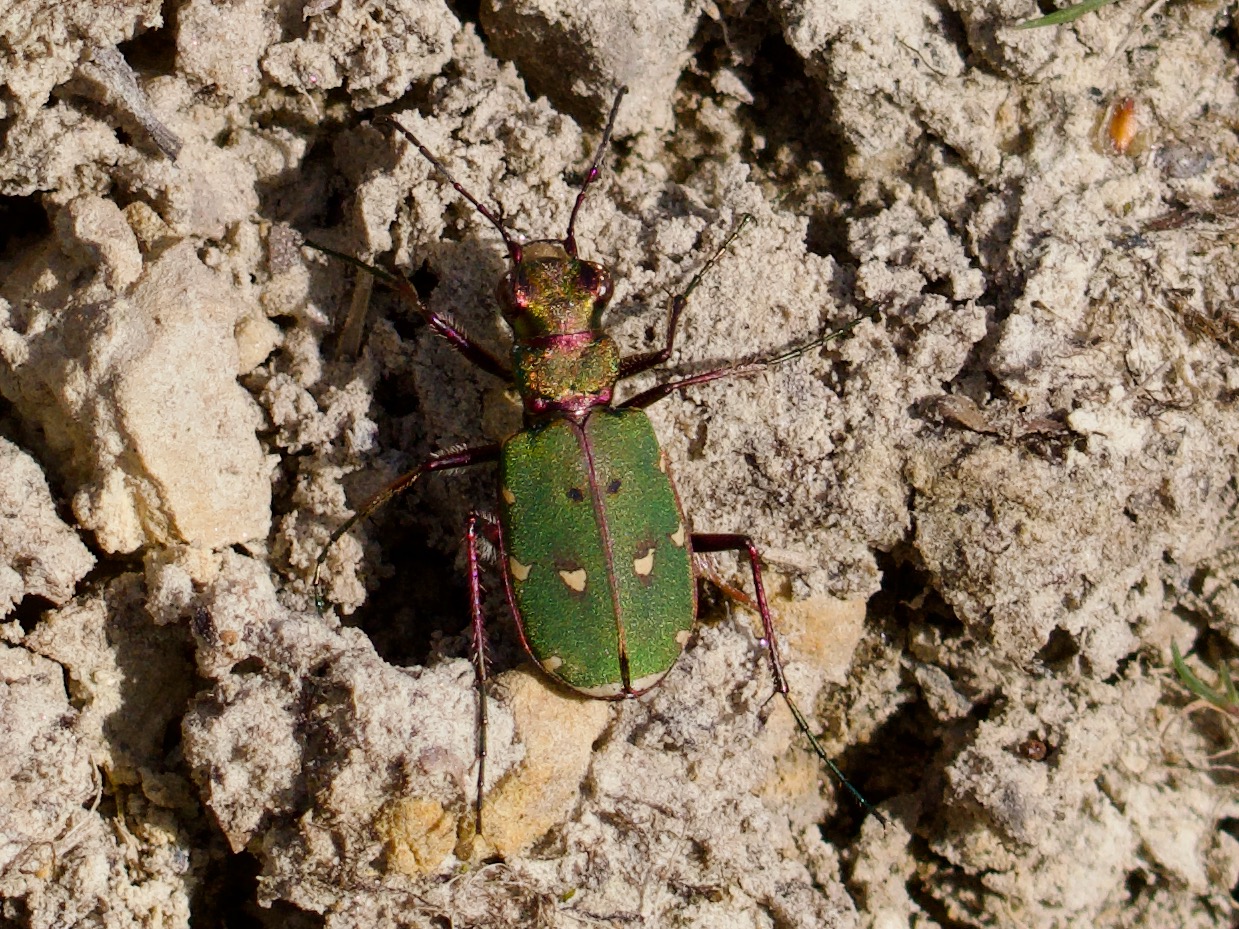
Saturday 12th April 2025
RSPB Pulborough Brooks, Sussex
East Grinstead RSPB Local Group
I could only stay for a couple of hours as I needed to get back home and get ready for the Brighton v Leicester game at the AMEX in the afternoon. Despite this, I was able to see some great birds, including my first Nightingale of the year. John Edwards' report is shown below in full.
Saturday 12th April 2025
Pulborough Brooks
East Grinstead RSPB Local Group
(25+ members present)
Trip Report
The spring trip to Pulborough Brooks is always popular with members and for good reason given the sightings in previous years. This year was no exception with the glorious spring weather producing another splendid turnout. It was nice to see Dickie Bird out birding with us again. Kevin had the unenviable task of keeping such a large group in order and the phrase “herding cats” springs to mind. He rose to the challenge magnificently.
Inevitably, given the size of the group, we did morph into ad hoc sub groups, but we stayed connected throughout the morning and everyone got to see most of the birds on show.
Our “target” birds today were nightingale and white-tailed eagle. We hit the jackpot with one but missed out on the other. In all we saw or heard 62 species of bird; a very pleasing total but we didn’t see either a kestrel or kingfisher today.
Starting and finishing at the visitor centre, we processed in anti-clockwise route around the reserve taking in all the usual hides and viewing points.
After hopefully scanning the horizon from the view point by the visitor centre for white-tailed eagles (no joy), we made our way to the small meadow by the yurts where a nightingale could be heard singing from the depths of the bushes. It wasn’t visible though. We caught up with the rest of the group just past Fattengates, where two nightingales were in full song and showing well. We all had superb views of this enchanting songster. Not to be outdone they were joined by cetti’s warbler and newly-arrived whitethroat. Cetti’s warblers were to be seen and heard all round the reserve as were the also newly arrived blackcaps with their melodious warble. Two treecreepers were busy in the branches of a nearby oak tree too. A terrific start and one of our target birds seen already! The nightingales were probably the highlight of the trip for most as it is rare to get such good views.

Nightingale
Photo: Chris Harries

Treecreeper
Photo: Patrick Sullivan

Blackcap
Photo: Phil Aylen
On to Jupp’s view, where we added the usual wildfowl to the list (teal, shoveler, wigeon, gadwall, shelduck etc). Redshank were in evidence as were a good number of lapwing, looking spectacular in the sunshine. Those with scopes were able to pick out two little ringed plovers too – although we got a better view of them from Nettley’s Hide. A distant snipe was seen in flight briefly.

Redshank
Photo: Patrick Sullivan

Lapwing
Photo: Ian Hodgson

Little Ringed Plover
Photo: Phil Aylen
The scratchy song of a warbler was heard and on arrival at Nettley’s Hide we were greeted with excellent views of a lovely sedge warbler, flitting from branch to branch in front of us and showing well.
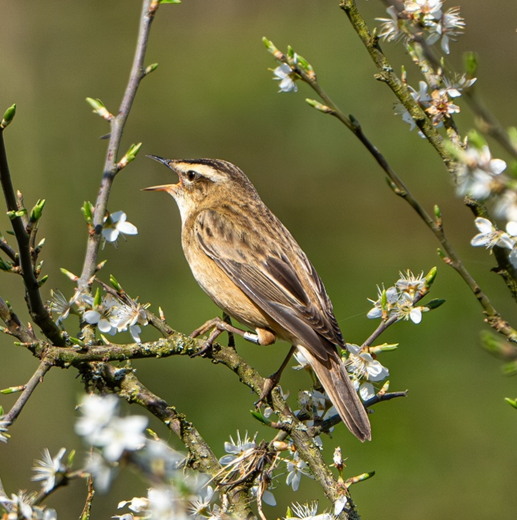
Sedge Warbler
Photo: Patrick Sullivan
After a quick stop at Hanger View where a barn swallow was seen briefly by some, we headed to Little Hanger Hide, but there was nothing new to be seen. It was the same birds but closer up at Winpenny Hide, except that on further examination, what at first glance looked like a redshank was in fact a ruff. Again there was nothing new on show at West Mead Hide, but it was good to take the opportunity to admire now familiar birds such as the avocet, at close quarters.
On our amble back to the visitor centre through the meadows, we added stonechat and meadow pipit to our list.
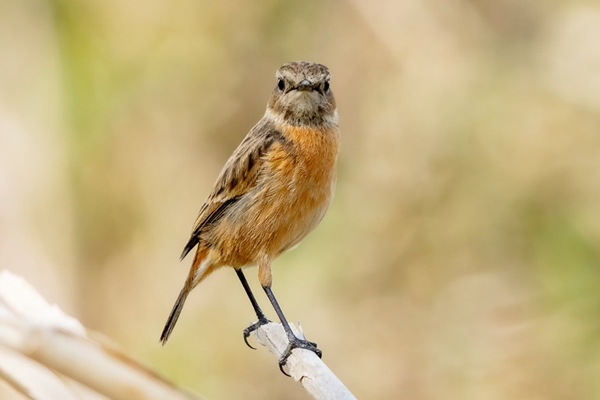
Stonechat
Photo: Phil Aylen
It was generally pretty quiet on the raptor front with just a couple of circling buzzards and a distant red kite on display. No sign of the white-tailed eagle, or the usual peregrine or even a kestrel. A small falcon was seen at the beginning of the trip at the viewpoint, but it moved at speed and was gone in a flash which made ID impossible.
After lunch, 16 members headed for the adjacent woodland in search of firecrest which we had seen here in previous years. Sadly, despite our best efforts, the firecrests refused to put in an appearance and the possible candidates we did see in the trees, turned out to be blue tits!
We did however see a large red damselfly (pyrrhosoma nymphula) in this area. Generally it is a bit early in the year for odonata, but this damselfly is one of the first to emerge each year, so our specimen would have been quite fresh.

Large Red Damselfly
Photo: Chris Harries
It was a great day for butterflies too. With the cuckoo flower now in bloom it was no surprise to see male and female orange tips fluttering all over the reserve. We also recorded brimstone, holly blue, peacock, comma, large white, green-veined white and speckled wood.
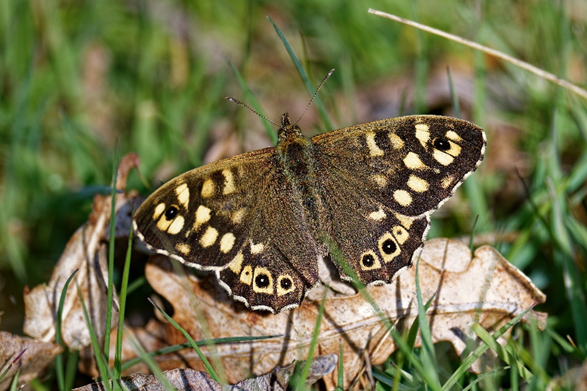
Speckled Wood
Photo: Paul Stillman

Thank you to our photographers for their excellent pics, with so many to choose from, it was quite a challenge deciding which ones to include in the report! If you have some pics that I have not included, don’t forget to send them to Chris for inclusion in the “April through a lens” blog on our website.
Another excellent day out with the nightingales being the clear highlight – many thanks Kevin!
John Edwards
Species List
Avocet | Meadow Pipit |
Black-headed Gull | Mistle Thrush |
Blackbird | Moorhen |
Blackcap | Mute Swan |
Blue Tit | Nightingale |
Buzzard | Nuthatch |
Canada Goose | Pheasant |
Carrion Crow | Pied Wagtail |
Cetti’s Warbler | Raven |
Chaffinch | Red Kite |
Chiffchaff | Redshank |
Dunnock | Reed Bunting |
Egyptian Goose | Robin |
Gadwall | Rook |
Goldfinch | Ruff |
Great Spotted Woodpecker | Sedge Warbler |
Great Tit | Shelduck |
Greenfinch | Shoveler |
Green Woodpecker | Skylark |
Grey Heron | Snipe |
Greylag Goose | Song Thrush |
House Sparrow | Starling |
Jackdaw | Stock Dove |
Jay | Stonechat |
Lapwing | Swallow |
Lesser Black-backed Gull | Teal |
Little Egret | Treecreeper |
Little Ringed Plover | Whitethroat |
Long-tailed Tit | Wigeon |
Magpie | Woodpigeon |
Mallard | Wren |
Species Count: 62
2025 species count = 148