Below is a copy of Marcus' report.
Day 2 of a three day Summer Tour today. It was a beautifully bright and sunny morning, clouding over later on, but dry all day and not as windy as yesterday, a great day to be out. The plan for this morning was to go looking for birds of prey. With the good weather we set off full of optimism and a Kestrel on a telegraph post by the roadside was a nice start.
Day 2 of a three day Summer Tour today. It was a beautifully bright and sunny morning, clouding over later on, but dry all day and not as windy as yesterday, a great day to be out. The plan for this morning was to go looking for birds of prey. With the good weather we set off full of optimism and a Kestrel on a telegraph post by the roadside was a nice start.
We parked up on the edge of a farm track, by a rough grass field. As we were unloading the car, one of the group asked "what's that on the wires" and we looked over to see it was a juvenile Cuckoo perched on the wires across the field. We got it in the scope and had a look at it - a great bird to see, particularly in farmland these days, with the population having declined dramatically in recent years.
With the scope left on the Cuckoo for people to look at, we turned our attention back to unloading the car. The same member of the group then asked "what's that next to the Cuckoo". A second bird had appeared a little further along. We expected it to be the resident Kestrel which is often perched here, but were very surprised to look over and see a second juvenile Cuckoo on the wires.
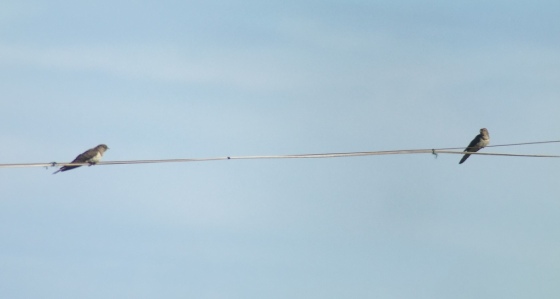
Cuckoos - 2 juveniles together on the wires
Cuckoos and uncommon enough anyway, but it is very unusual to see two juveniles together, particularly these days. As the female Cuckoo lays just a single egg in the host's nest, you don't get multiple birds in a brood like other species. Perhaps a female Cuckooearlier in the year had parasitised multiple nests in the immediate area earlier in the year and both juveniles had fledged at around the same time. Perhaps they had independently found a good feeding area. Whatever the reason, it was a great sight to see.
The Cuckoos periodically dropped down into the grass below, presumably looking for food, before flying back up to the wires. Eventually one flew off, back over the field. Then, while we were still marveling at the Cuckoos, a ghostly white shape appeared over the rough grass in front of us as a Barn Owl flew across. It landed on a post on the back, where we could get it in the scope.
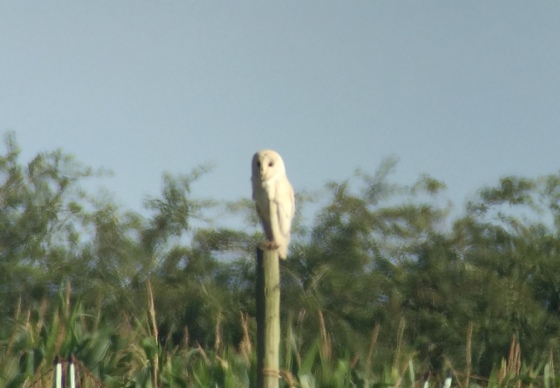
Barn Owl - flew across in front of us and landed on a post
After a wet night last night, the Barn Owl was presumably still out hunting, probably trying to feed a growing brood. The Kestrel was on the top of a telegraph post nearby too. What a great start to the morning!
Eventually we had to tear ourselves away from where we had parked and we walked up along the farm track to a suitable vantage point from which we could scan the surrounding countryside. It was warming up nicely now and several Common Buzzards circled up out of the trees. We could hear them calling.
There were several Skylarks up singing too now, or flying around over the stubble in front of us. A Green Woodpecker laughed at us from the nearby wood a couple of times, before flying over the field past us. A Yellow Wagtail called once, but we didn't manage to pick it up.
A Brown Hare came running up the stubble field towards us. It was in a dip and stopped just short of the ridge, looking at us. It came a little closer and stopped again, so we could now see its head and shoulders. It was clearly nervous at our presence, and sat there watching us. Finally it decided it was too risky to come out in front of us and it turned and ran back down through the stubble.
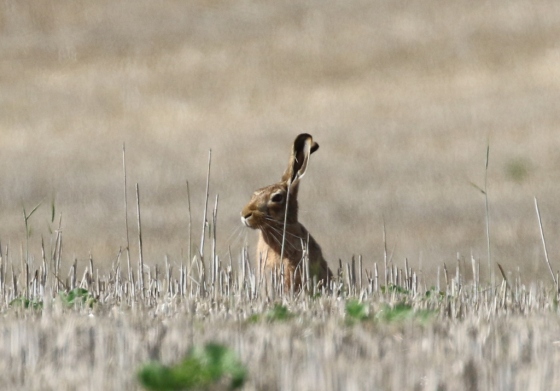
Brown Hare - watching us from the stubble
After a pleasant and successful hour watching the fields for raptors, we walked back to the car. A Marsh Harrier was now quartering the back of the rough grass field, a nice addition to the morning's list of birds of prey.
Our next destination was Titchwell, so we cut in round via Choseley on the way there. There were lots of birds along the road, in and out of the hedges. We caught the back end of a couple of Yellowhammers and one of group asked if we could get a better look at one, so we decided to make a quick stop at the barns. There were lots more Brown Hares in the recently harvested fields and a few Red-legged Partridges too. We could hear a Yellowhammer singing, 'a-little-bit-of-bread-and-no-cheeeese', and looked across to see a very smart male perched in the top of an oak tree, its bright yellow head glowing in the sun.
There were more birds along the road down to Titchwell. The hedges were clearly providing protection from the wind, creating a sheltered microclimate. Several juvenile Goldfinches were bathing in a puddle. We pulled up to look at a flock of birds on the tarmac and found three juvenile Yellow Wagtails in with a large group of Pied Wagtails, presumably finding lots of insects on the road.
Down at Titchwell, we had a quick look round the car parks first. A couple of Greenfinches flew out of an elder as we passed and a family of Reed Warblers were clambering about in the bushes calling noisily, including a recent fledgling with short tail and still carrying some fluffy down around its head. We scanned over the fields at the back, but the only bird of note here was a single Stock Dove. We were hoping to see the Turtle Doves which have been breeding here, but there was no sign of them. Apparently the male had been purring here only an hour or so earlier, but had now gone quiet.
There was a bit of time before lunch, so we decided to head round to Patsy's Reedbed and also have a look along the Autumn Trail, which had just been opened this morning for the first time this year. As we passed the visitor centre, the feeders were full of Greenfinches and Chaffinches, along with a few Great Tits and Blue Tits. Walking along Fen Trail, a tit flock passing quickly through the sallows included several Long-tailed Tits, but there was no sign of the Turtle Doves in the trees here.
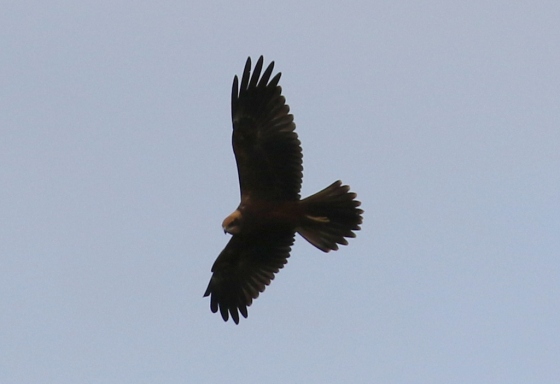
Marsh Harrier - a golden-headed chocolate brown juvenile
Round at the viewing screen overlooking Patsy's reedbed, the first bird we saw was a juvenile Marsh Harrier circling up over the reeds. It was a typical juvenile, with a golden-orange head and the rest of it dark chocolate brown. We saw several juvenile Marsh Harriers around the reedbed today, with varying amounts of pale feathering on the head, one with just a small patch of gold on the back of the neck.
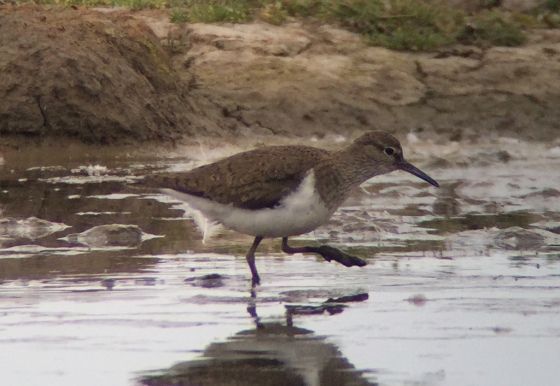
Scanning the pool, a Common Sandpiper flew across on fluttering bowed wings and landed along the near edge before running into the vegetation out of view. There were a few Little Grebes and a couple of Common Pochard among the Mallard. A Grey Heronwas standing statue-like on the edge of the reeds, staring down into the water. Lots of House Martins and Sand Martins were hawking for insects low over the water and the reeds beyond.
Looking over towards Brancaster, we caught sight of a very distant Turtle Dove as it flew across and disappeared behind Willow Wood, but not all the group could get onto it and the views were not entirely satisfactory. Frustrating! With the Autumn Trail having just opened this morning, we wanted to have a look along there and we thought there was a chance we might see the Turtle Dove again, but it didn't reappear.
As we walked along East Trail, we heard Whimbrel calling over towards the freshmarsh and looked across to see four flying up over the reeds. They circled over towards us, instantly identifiable even from their distinctive whistling call, before disappearing away to the SW. We had a quick look from up on the bank at the start of the Autumn Trail extension, which produced a very distant Arctic Skua flying past out over beach, before we lost sight of it behind the dunes.
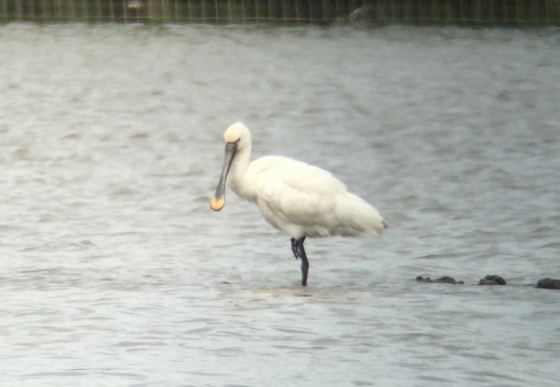
Spoonbill - an adult, with yellow-tipped bill
As we made our way along to the end of Autumn Trail, we could see a large white shape on the freshmarsh, a Spoonbill. Even better, it was awake, preening, and we could see its yellow-tipped black bill, an adult. There were a few waders out on the freshmarsh too from this end, but they would be easier to see close up round at the hides. A Common Sandpiper was chased off by an Egyptian Goose and flew up onto the fence around Avocet Island. A second Egyptian Goose was standing on one of the fence posts - and was still there when we looked across from Parrinder Hide later in the afternoon!
We could hear Bearded Tits calling, but couldn't see them in the reeds, and another juvenile Marsh Harrier patrolled up and down the bank ahead of us. Then it was time to head back for lunch.
The group really wanted to see a Turtle Dove, but it felt like we might be out of luck. Still we scanned all the likely trees on the way back. We were just walking past Patsy's Reedbed when we spotted a shape in the top of a bush ahead of us. Yes - a Turtle Dove! It was perched in the top of an elder, preening. We got it in the scope from where we were standing, and had a quick look in case it flew off.
People coming from the other direction walked right past the Turtle Dove, seemingly without even noticing it. We were some distance away and reckoned we could get much closer. We gradually narrowed the distance until we were quite close, and had stunning views of it, we didn't even need the scope now. It seemed totally unconcerned by our presence, eventually finishing preening at which point it dropped down into the bushes. Great stuff!
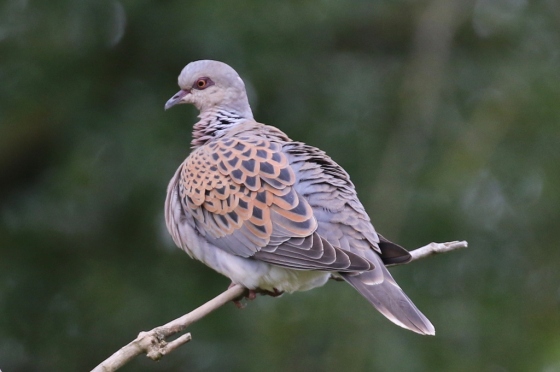
Turtle Dove - gave stunning views on our way back for lunch
After a late lunch in the picnic area, given our distraction with the Turtle Dove, we headed out onto the main part of the reserve. There were just a few Mallard and Gadwall out on the reedbed pool, and a distant Bearded Tit flew across while we were scanning the water. A Cetti's Warbler sang a quick half burst from the reeds below the path as we passed by.
There were lots of waders from Island Hide, though mostly the larger ones today. There are lots of Ruff on here at the moment. They are moulting rapidly, some now pretty much in grey winter plumage, but others still with varying numbers of gaudy summer feathers.
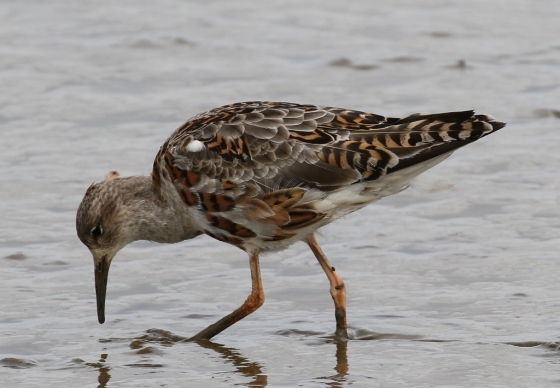
Ruff - some still with a few remaining bright summer feathers still
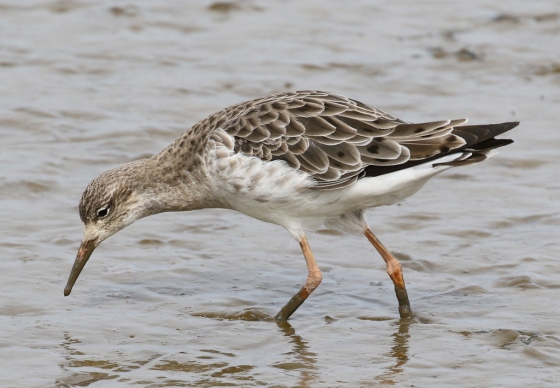
Ruff - others almost entirely in grey winter plumage already
There are lots of Avocets on the reserve at the moment, with recent counts in excess of 500 now. As well as the birds which had bred here, many more gather here at this time of year to moult. in front of hide. Several were feeding right in front of the hide, until they were flushed by another juvenile Marsh Harrier.
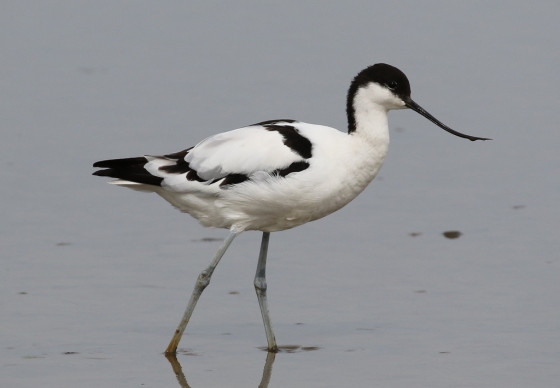
Avocet - over 500 on the freshmarsh at the moment
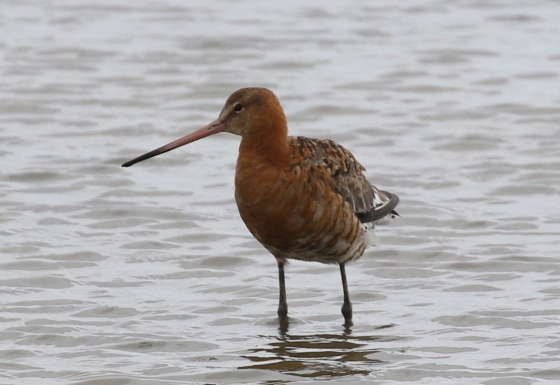
There are lots of Black-tailed Godwits here at the moment too, many still largely in rusty orange summer plumage. We could also see three Spotted Redshanks further over, towards the Parrinder bank, but they were asleep at this point. There were three Spoonbills on the freshmarsh now, but they were all asleep too, on the edge of the small island at the back.
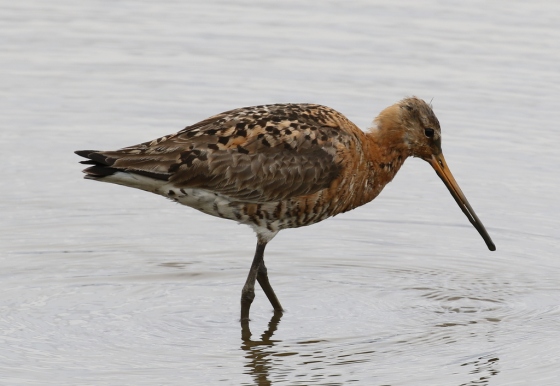
Black-tailed Godwit - still largely in summer plumage
There is a nice selection of smaller gulls on here a the moment. There are lots of Black-headed Gulls, both adults and chocolate brown juveniles. In amongst them, on the nearest island, we found two diminutive Little Gulls, both first summer birds. We had a look at a couple of Mediterranean Gulls from here too, the adults gradually losing their black heads now but still sporting a heavy and bright red bill and clean white wing tips.
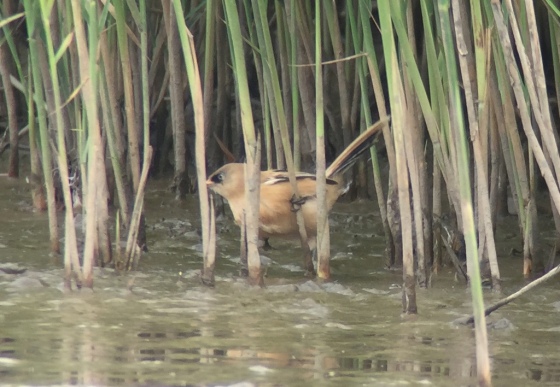
While we were scanning the freshmarsh, we could periodically hear Bearded Tits calling from the reeds. We kept looking over to the edge of the mud but couldn't see them at first. Finally, like buses, first one, then several more appeared. They eventually showed well, feeding at the base of the reeds.
From back up on the main path, we got better views of the Spotted Redshanks. They had multiplied in the meantime, up to four now, and had woken up and started feeding so we could get a good look at their long, needle-fine bills. Like the Ruff earlier, the Spotted Redshanks were in different stages of moult from their black summer plumage. One was pretty much in silvery grey winter plumage already, but the others were still variously speckled with black on their underparts.
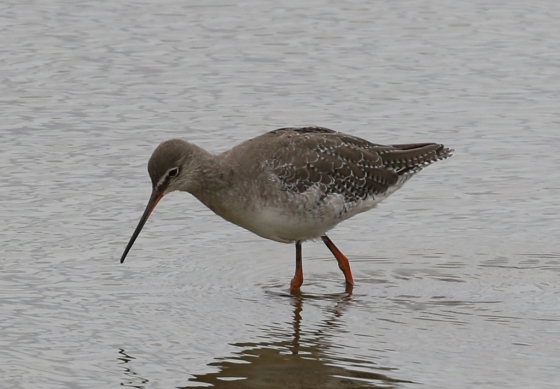
Spotted Redshank - this one pretty much in winter plumage already
We had a quick look in at Parrinder Hide on our way out. There were several scaly-backed juvenile Mediterranean Gulls on the islands in front of the hide. Further out, four summer plumaged Knot had dropped in while we had been walking round.
It was already late afternoon and we wanted to have a look at the sea, so we hurried out to the beach. The tide was out and the usual waders were feeding out on the mussel beds. We had a look at a couple of Bar-tailed Godwits in the scope and a single Sanderling flew in with two Turnstones and dropped in on the beach. Out to sea, lots of Sandwich Terns were flying back and forth and a single Great Crested Grebe was out on the water.
The first surprise here was a Spoonbill, which flew out over the dunes and landed on the beach. Even more bizarre was a single Egyptian Goose which suddenly appeared out on the mussel beds, before flying west along the tideline. You don't often see Egyptian Geese on the beach!
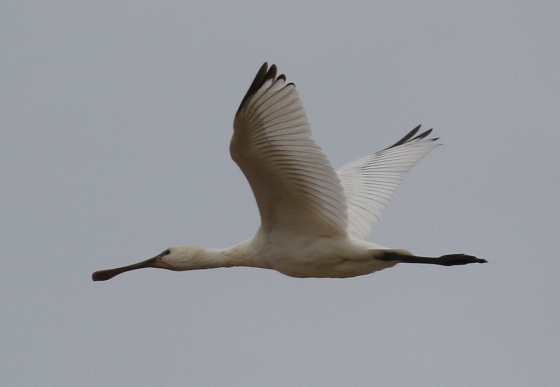
Spoonbill - flew out past us and landed on the beach
Then it was time to head back, in good time to allow everyone to get something to eat. The plan was to go looking for Nightjars this evening, but the weather forecast was really terrible, with heavy rain expected to move in from around 8pm. We feared it might be a wash out. It was already starting to spit with rain when we met again at 7.30pm, but we set off anyway to see what we could see before the rain set in properly.
We started by looking for Little Owls. They like to perch out in the evening sunshine, but it was already cool and cloudy, it seemed unlikely we would find one today. We started scanning the roofs of the farm buildings where they like to sit. There were a few Red-legged Partridges and an Oystercatcher here. Several Brown Hares were running round in the yard below. A few Greylag Geese had gathered in a field of cut straw nearby before flying down to the coast for the night and a large flock of Rooks and Jackdawswas similarly gathering before heading off to roost.
A Mistle Thrush appeared on the roof, then a second joined it. The next thing we knew, there were 8 Mistle Thrushes together. We were just watching them through scope when a Wheatear appeared with them. It was a juvenile, presumably dispersing from somewhere after the breeding season, although there aren't any breeding close to her, so this was an unexpected bonus. A male Yellowhammer joined all the other birds on the roof too.
It was still not raining properly but it started to spit with rain more heavily now. It was clear we were very unlikely to find any Little Owls so we decided to move on. Normally at this stage of the evening, we would go looking for Barn Owls, but it was unlikely they would be out hunting in this weather either. At least we had seen one this morning, so we decided on a change of plan.
Late in the evening, particularly at this time of year, a good number of large gulls drop in to the scrapes at Cley to bathe and preen before heading off to roost. There have been several Caspian Gulls dropping in over recent nights, so we decided to try that instead. At least we would have the shelter of the hides if the rain did get much worse.
As we drove towards Cley, news came through that an adult Caspian Gull had just been seen there. We walked quickly out to the hides and, with a bit of help from the committed gull watchers in the hide, we were straight onto it.
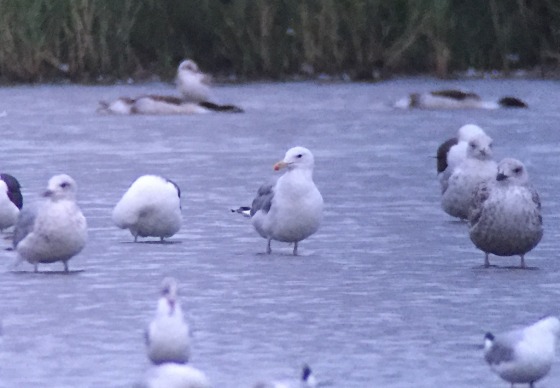
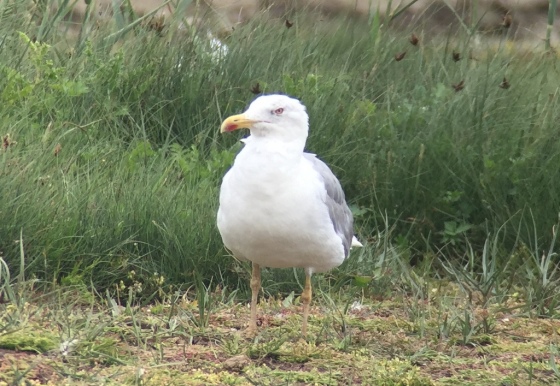
Caspian Gull - an adult, on Simmond's Scrape at Cley at dusk
Adult Caspian Gulls are particularly subtle birds and this gave us a great opportunity to study it and talk about the key identification features. It was a noticeably big, tall gull, particularly compared to the Lesser Black-backed Gulls next to it. The dark eye stood out on the white head, with a long face and long parallel sided bill.
The Caspian Gull was preening and as it turned, it stuck one of its long wings out to the side, so we could see the pattern on the underneath of the wing tip. This was the real clincher - the distinctive under-primary pattern, with a white tip, then a narrow band of black before a long tongue of white.
There were also meant to be two juvenile Caspian Gulls here this evening, but although we could see the birds, they were asleep and facing us so we couldn't see any detail. There was a good number of other large gulls, especially Lesser Black-backed Gulls. We could see several Yellow-legged Gulls in amongst them too, and we got the scope on a nice adult.
The light was fading fast tonight, given the dark clouds. We had already stayed a little longer than planned at Cley, but we decided to drive up to the heath anyway and try our luck, we had nothing to lose. As we came out of hide, it started to rain properly and it really felt like we would be out of luck. But the rain had eased again by the time we got up to the heath and as we opened the car door, we could hear a Nightjar churring already.
We walked quickly out to the middle, with two more Nightjars churring, one each side of us on the way out. It was very gloomy already out on the heath, but at least we were surrounded by Nightjars churring. We had a glimpse or two of one of the males flying around the trees, but it was hard for everyone to get onto it. It stayed further out tonight, not coming in to its favourite perch, it was mixing churring and hawking for insects from the tree it had chosen. Eventually it perched up on the edge of the tree and we could get it in the scope, silhouetted against the very last of the light.
We stood there for a few more minutes listening to the Nightjars churring. It was getting too dark to see them now, so we decided to call it a night. It was the right move, as they had all gone quiet by the time we got back to the car. There had been a surprising amount of Nightjar activity tonight, given the conditions and we had been very lucky given the weather forecast. On the drive back, the heavens finally opened.