Tuesday, 10 March 2020

07/03/2020 Marcus Nash Winter Tour Day 2/3 Willow Tits

07/03/2020   Marcus Nash Winter Tour - Day2/3

Day 2 of our three day Winter, Brecks & Goshawks tour today. It was rather cloudy and grey first thing, with some brief spits of rain which were not in the forecast. Thankfully it didn't come to anything, and remained dry thereafter, with some sunny intervals developing from late morning. The wind was very light again first thing, but did pick up a bit through the day. We headed back down to the Brecks in the morning, but finished the day up in North Norfolk.
We were on red-alert for any reports of lesser spotted woodpeckers at Santon Downham but there were none. Our primary targets today were goshawks and woodlarks.  This time we were successful on both counts and we also had a huge bonus with good views of the very rare Willow Tit!
  • It didn't take long to find the woodlarks!  We saw something drop down into the grass in the far corner, so made our way over to see what we could find. We could hear a one singing quietly now, but couldn’t see it at first. It was down on the ground, hidden in the long grass. Then one flew up from further over, out in the middle of the clearing, and started singing. A second, possibly the one we had been listening to, also flew up and landed in the trees at the back, where we could get it in the scope.
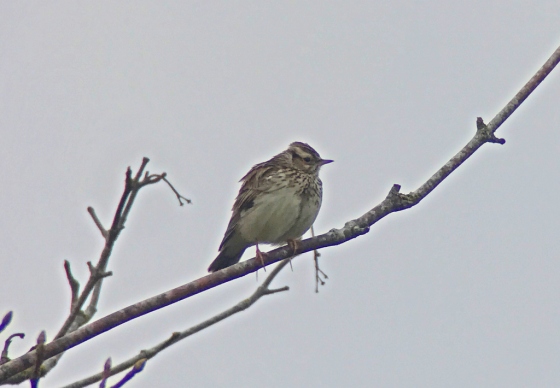
Woodlark 1
courtesy of Marcus Nash
  • There was quite a bit of woodlark activity now, involving at least three birds. We watched the one in the tree at the back for a while, before it dropped back down into the grass. We managed to see it on the ground this time, and a second bird nearby calling was possibly a female. When another male flew in, the two of them chased each other back up into the trees. But apart from the first bit of song flight, the males were only singing from perches in the trees or down on the ground this morning.
Having enjoyed good views of the woodlarks, we drove round to another forest track and walked up into the trees. We were looking for willow tit here and there were certainly lots of tits coming and going from the feeding table set up in the pines.
  • We stood and watched for a while, but all the black capped tits we saw were dozens of coal tits and a good number too of marsh tits. A nuthatch typically darted in, grabbed a seed, and was back off into the trees.
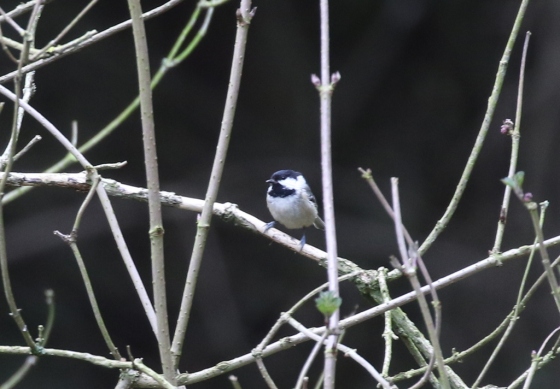
Coal Tit
courtesy of Marcus Nash
  • Then we heard a willow tit calling in the pines, a distinctive nasal scolding call. It was deep in at first, but gradually came closer each time we heard it again. Eventually it made its way to the edge of the trees and we managed to pick it out, feeding high in the pines. It seemed to be feeding on the cones. A second willow tit was still calling, deeper in. The first bird looked like it was making its way towards the feeding table, but it never dropped down and disappeared back into the trees behind.
The willow tits here are a small remnant population: the species has disappeared rapidly from large swathes of southern Britain in recent years and they are still just about clinging on here. They can be difficult to see in the dense coniferous plantations, spending much of their time up in the tops of the trees, so we had done well to get such prolonged views of one today. We decided to move on.
 
 
The weather was starting to brighten up and the wind seemed like it had picked up a little, so we headed over to see if we could find a goshawk. We parked on a high point, overlooking the forest, where several other people had already gathered. While we were getting out of the minibus, someone came over to say there was a goshawk perched in the top of a fir tree across the field in front. We got the scope straight on it, but unfortunately it dropped down before everyone could get a look and disappeared into the trees. Still, it was a good start.
  • With the brighter weather, there were lots of common buzzards circling up now, including a striking pale one. A red kite came up too, off in the distance. Fortunately, we didn't have to wait too long before another goshawk appeared. It circled up above the trees, a male, grey above and pale whitish below. It was distant at first, drifting first one way, then back the other. Then it turned and headed straight towards us. It was not displaying today, but flying purposefully, with deep and powerful wingbeats interspersed with short glides. It headed away to our right slightly, crossing the road as we lost sight of it behind some trees.
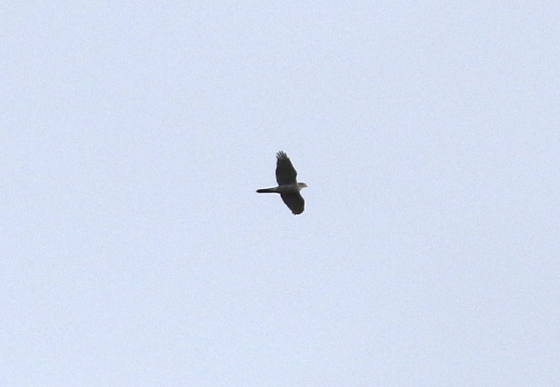
Goshawk
courtesy of Marcus Nash
 
  • When all the woodpigeons came out of the trees, this would normally mean a goshawk was hunting, but this time a peregrine appeared instead. It flew out low over the treetops, across the field and over the road. It followed the line of the shelter belt on the far side of the field beyond us, flushing all the pigeons from there too, before disappearing off over the trees behind us.
  • A sparrowhawk made a brief appearance too and a kestrel hovering over the field behind us added to an excellent variety of raptors here this morning.
It was almost time for lunch now, but we figured we had time for one more quick stop first. We made our way deeper into the forest and parked at the head of another ride. As we walked in, we heard a woodlark overhead and looked up to see it fluttering over the trees beside the path singing. It flew round past us and disappeared back over the road, beyond where we had parked.
  • We had just started to walk back to look for it when the woodlark came back overhead singing again and dropped down into the clearing further down the track. So we turned round again and walked over to where it had seemed to go down. We were scanning the low vegetation when it walked out from behind a low bank right by the path, just a couple of metres from us. It took off but thankfully landed just a couple of metres further back, and we had a great view of it as it picked its way through the vegetation feeding, stopping on the top of a small clod of earth. Cracking views and a better photo opportunity than the ones we had seen earlier, for the photographers in the group.
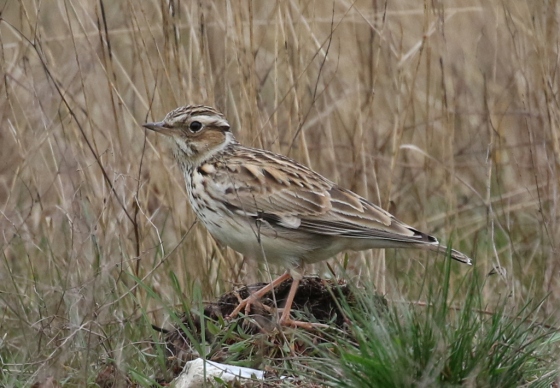
Woodlark 2
courtesy of Marcus Nash
 
 
The woodlark gradually made its way back into the long grass, so we headed back to the minibus and drove round to Brandon again for lunch and a welcome hot drink.
  • After lunch, we made our way north to Fincham. A Red Kite was hunting out over the fields as we drove down the road and found somewhere to park. As we got out, we could already see the great grey shrike on the wires a little further up. We got it in the scope and had a good look at it.
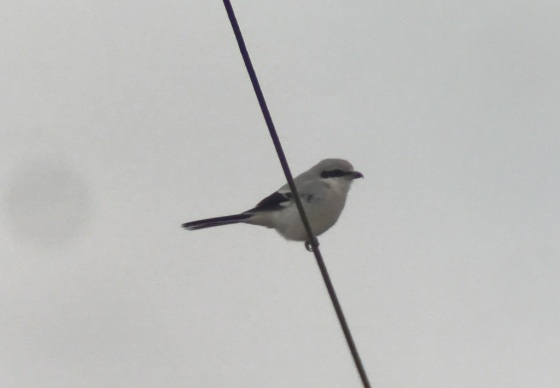
Great Grey Shrike
courtesy of Marcus Nash
 
  • The great grey shrike was very mobile, dropping down into the field to look for food, and then back up to the wires. It flew across to some bushes along the edge of the field further up, and spent some time hunting from there, then came back up onto the wires by the road. When it flew across the road and went further out across the field the other side we decided to move on.
We had managed to catch up with most of our main targets in the Brecks (and surrounding areas) now, so we decided to head up to the North Norfolk coast for the rest of the afternoon.
 
  • The wintering rough-legged buzzard at Wells had gone AWOL for a couple of weeks but had then reappeared back in its usual bush a couple of days ago, as if nothing had happened. As we pulled up in the layby, we could see it on top of the aforementioned bush.  We got out of the minibus and got the scopes on it, noting the rough-legged buzzard's very pale head contrasting with a dark blackish-brown belly patch.
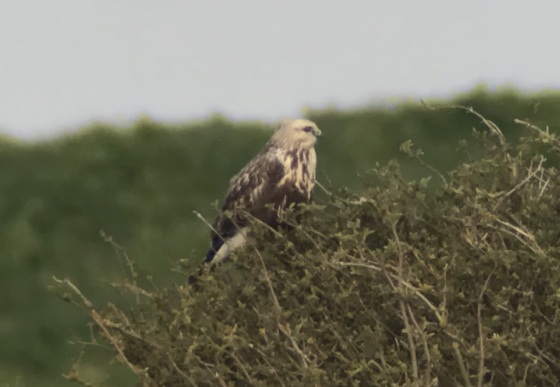
Rough-legged Buzzard
courtesy of Marcus Nash
 
  • Continuing on over the bank, we stopped to scan the marshes. There was a nice selection of waders out on the flooded grazing marsh beyond, several ruff flying round with a flock of dunlin, a single curlew, lots of lapwings and a few more redshanks.
  • A large flock of brent geese kept flying in and out of the old pitch and putt over towards the harbour wall, coming over our heads chattering noisily. Looking through the greylags out on the grass, we found a single pink-footed goose hunkered down behind a line of reeds. Another little group of pinkfeet flew up calling further back. There was a nice selection of ducks here too, including wigeon, teal and shoveler.
  • A pre-roost gathering of pied wagtails was down in the wet grass in front of the water, along with a single meadow pipit. A bigger flock of meadow pipits flew in along the bank. Four brown hares in the ploughed field the other side of the track chased each other round at one point and even engaged in a brief bout of boxing (it is March, after all!).
 

It was a nice place to finish the day, scanning the marshes here, but it was time to head back now. We would be spending the day tomorrow along the coast here too, with lots more to see yet.

06/03/2020 Marcus Nash Winter Tour Day 1/3

06/03/2020   Marcus Nash Winter Tour - Day1/3

A welcome return visit to Norfolk for another tour with Marcus Nash. 

We were lucky with the weather, mostly bright with sunny intervals and a light N wind, although there was a chill in the air.

We spent the first day down in The Brecks targeting lesser spotted woodpecker.  Things didn't quite go to plan and we dipped on the woodpecker but we picked up a couple of surprise birds and some welcome additions to the year list.


As we arrived at Santon Downham, the small crowd gathered on the bank of the Little Ouse told us that there had been no sign of the woodpecker for at least 1 1/2 hours. We stood with them for a while, but with nothing doing here, we decided to walk on a little further.
  • Marcus heard the distinctive 'kee,kee,kee' call of a lesser spotted woodpecker from deeper in the trees. We stopped and scanned but couldn't see anything.  While we were listening to try to hear it again we received a message to say that it had flown in back where we had been standing earlier. We hurried back, but they had lost sight of it, and then next thing we knew it flew out of the tree tops and over our heads, disappearing into the sun across the river.
 
  • There had been a firecrest in the churchyard earlier. We  stopped to talk to some locals who were also looking for it when we saw a small bird fly in to the sunny edge of trees. The firecrest! It was low down in a box bush, at about eye level, and gave some great views as it flitted in and out of the branches. The light was perfect too and its bright golden yellow crown stripe was shining in the sun.  It then flew across and landed in a conifer in the corner of the churchyard closest to us. We could see the striking black and white striped face pattern which distinguishes it from its close cousin, the goldcrest.


courtesy of Marcus Nash


We made our way round to Brandon for lunch. There were lots of tits coming and going from the feeders as we ate out in the picnic tables in the sunshine, and a nuthatch calling in the trees.

  • Afterwards, we made our way down to the lake. A pair of mandarin ducks were loafing on the ledge of the duck house but it was hard to get a clear angle on them through the reeds. Thankfully, there was another pair over the far side, out of the reeds along the edge. We walked round and, predictably, they swam straight over to where we had just been, but then more helpfully came out into the open for us as we got back round
courtesy of Marcus Nash

Our destination for the afternoon was Lynford Arboretum. We met someone in the car park who told us the hawfinches were showing very well in the paddocks, so we headed straight down there to make sure we caught up with them, in case they flew off.

  • Thankfully, several of the hawfinches were still feeding in the grass below one of the hornbeams out in the middle and we quickly got the scopes on them and admired their enormous, cherry-stone-cracking bills.
courtesy of Marcus Nash


Having enjoyed some great views of the hawfinches, we made our way back to the bridge. There was some seed spread out on the tops of the pillars, which we had topped up on our way past earlier.

  • There was a steady stream of tits coming and going, and we had some great views of marsh tits here, as usual.

  • There were lots of siskins flying in and out of the trees above the bridge here too.
courtesy of Marcus Nash

  • We watched a treecreeper climbing up the trunks of the alders opposite, before flying down to the base of the next one and starting again.
  • A nuthatch in the trees wouldn’t come in to the food today - probably put off by a combination of all of us standing on the bridge and a couple of photographers stood very close to the pillars.
  • Back over the bridge to the Arboretum, the tawny owls were in their usual tree, the two of them roosting side by side high in the spruce tree today. We had a look at them from the path, where they were very difficult to see until you knew where you were looking, and then got some better views from the other side.
courtesy of Marcus Nash


Walking back up along the path through the arboretum to the car park, we stopped at the gate with the feeders in the orchard. The feeders were empty and there was not much seed on the ground either today. Consequently, there were fewer birds than normal coming and going.
  • One or two yellowhammers dropped down briefly, but we found more of them in the bushes on the edge of the orchard, perched in the white blossom and dropping down into the long grass between the fruit trees.
courtesy of Marcus Nash

  • A brambling dropped down to the pool in front of the gate for a drink and then perched briefly on a branch above. But it flew off before everyone could get onto it. We thought that was it before more appeared higher up in the beech trees and we all got a good look at one or two. There have been very few here this winter - probably they have stayed on the continent this year.
 
 
It had been a super first day - much needed after an awful winter!


Monday, 9 March 2020

03/03/2020 Two more for my year list

Tuesday 3 March 2020

  • Whilst at Weirwood doing my voluntary work I saw my first treecreeper of the year.
  • Later on, before visiting a good friend in hospital at St Leonards, I twitched the red-necked grebe at Dungeness.

Wednesday, 26 February 2020

26/02/2020 Great Northern Diver at Newhaven Harbour

Wednesday 26 February 2020
Newhaven Harbour

  • Just had enough time to get down to Newhaven Harbour for the high tide at lunchtime and twitch the Great Northern Diver.  The bird was showing really well from the west quay, despite the constant patrolling of the motorised survey boat.

Sunday, 23 February 2020

22/02/2020 Goshawk and Woodlark at Acres Down in Hampshire

Saturday 22 February 2020

10 of us from the East Grinstead RSPB Local Group ventured down to Hampshire for our annual visit to Acres Down and Blashford Lakes.  We were rewarded with a fine birding experience, despite the awful weather.

It would have been easy to call the trip off, with a forecast of strong winds and more rain in the form of showers.  However we were determined to get out and about after being virtually grounded for weeks by the recent persistent poor weather conditions.


Acres Down
 
We targeted goshawk and woodlark at this venue. 

When we arrived at 09.30 the weather was at its worst with rain and a strong breeze - hardly conducive to looking for birds on the exposed slopes. A treecreeper seen in the car park and a very loud, singing song thrush provided some inspiration to get started despite the odds.

Up on the slopes we initially had very little to shout about, with a dunnock, a few meadow pipits and several goldfinch the pick of our sightings. 

A passing local patch birder was sceptical about our chances of seeing goshawks and suggested we descend into the valley below where he had seen crossbills and hawfinch.  We duly took the advice but after a while where we saw a treecreeper but little else we decided to return to the top again. By now the weather was improving, coinciding with a change in our luck. 
  • Near the top we heard a superb woodlark singing away almost directly above us in the sky.
  • Shortly afterwards we saw a magnificent female goshawk flying quite close to us.  Soon afterwards the male showed up too and we were able to enjoy their display routine for several minutes.   Not long after we sighted a third.

After lunch at the car park we moved on to our second venue at Blashford Lakes

Game on!


Blashford Lakes
 
Blashford was clearly looking the worse for wear after the floods over the past few weeks and wellies were the order of the day here.  We parked in the very wet north car park near the Tern Hide, spending time in the hide before walking over the road to visit the other hides.

  • We soon spotted the goosanders, way over the far side of Ibsley Water - a female and 2 drakes. 
  • There were scores of pintail present as well as a superb drake goldeneye, lots of pochard and the usual suspects.

At the very least we had seen all our target species!


Over the road the flooded paths were being reopened and we were able to visit Ivy South Hide, Woodland Hide and Ivy North Hide.
  • We saw fewer birds than normal from Woodland Hide but we did see nuthatch, long-tailed tit, chaffinch, goldfinch, dunnock, greenfinch, coal tit, blue tit and great tit but there were no woodpeckers around, no siskins and no redpolls.
  • On Ivy Lake we added gadwall and mute swan to our day list.

Pleasant and tranquil  - and the sun was shining!


A much needed outing and one we all enjoyed.

Monday, 3 February 2020

03/02/2020 Dartford Warbler

Monday 3 February 2020
Ashdown Forest, Sussex

I saw my first dartford warbler of the year on the Ashdown Forest this afternoon, just before it started raining.

Sunday, 2 February 2020

01/02/2020 London Wetlands Centre with Mark and Elizabeth

Saturday 1 February 2020
WWT London

I like to visit this site at least once a year looking for bitterns and jack snipe.  Last week, whilst at Arundel with Mark and Elizabeth they expressed an interest in going as they had never been before.  Thankfully it was dry and mild but the strong breeze would prove problematic.

  • As we entered the centre we were greeted with the sound, then the sight, of ring-necked parakeets flying around. I stopped counting when I reached 20.
  • 2 water pipits had been reported regularly recently and after a thorough search of the grazing marsh, Mark spotted one of the to the left of our position in the Peacock Tower hide about 75 metres away.  It was near some rocks on the edge of the pool and showing well as it moved around.
  • Mark also picked out an Iceland gull on a nearby island on the main lake and we were able to tick off all the pertinent ID features as it preened away.  What a terrific bonus!
  • Bitterns did not show today - not for us, nor for any of the many other birders who were looking.  The feeling was that they stayed deep in the reed bed to keep out of the strong breeze that was blowing through the reserve all day. 

We also took in a couple of talks as we wandered round.
  • One was on the plight of Bewick swans, the iconic bird for WWT - in front of 2 very obliging captive birds! 
  • The other was on short-clawed otters where Todd and Honey, the captive species, entertained us at feeding time. 

courtesy of WWT London


Just the job!